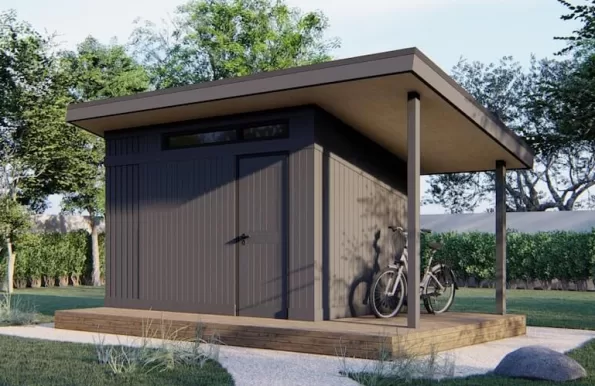
Your Ultimate Guide to Keeping Your Garden Shed Cool This Summer

The garden shed. It’s a quintessentially British dream, a small haven at the bottom of the garden. For some, it’s a sanctuary of sawdust and creation—a workshop. For others, it’s the new commute-free headquarters—a garden office. And for the socially inclined, it’s the legendary pub shed, the epicentre of summer gatherings.
But there’s a villain in this idyllic story: the summer sun. With a single-minded intensity, it can transform your beloved retreat into an unbearable, stuffy sauna. The dream of a productive afternoon or a relaxing evening pint quickly evaporates in the stifling heat, leaving you with a space that’s more of a glorified storage box than a functional room.
Fear not. Reclaiming your shed from the clutches of the summer swelter is entirely possible. It doesn’t always require expensive air conditioning units or a complete rebuild. With a combination of clever passive strategies, smart technology, and a little forward-planning, you can create a comfortable oasis, no matter how high the mercury climbs. This is your ultimate guide to a cool, usable garden shed all summer long.
The Foundation: Passive Cooling is Your First and Best Defence
Before you even think about plugging anything in, you must focus on passive cooling. These are methods that work with the environment to prevent heat from building up in the first place. They are the most sustainable, cost-effective, and often the most impactful solutions.
1. Embrace the Shade
The most significant source of heat for your shed is direct solar gain—the sun beating down on the roof and walls. Your number one priority is to block it.
- Natural Shade: If you’re planning a new shed, position it strategically. Can it sit under the canopy of a mature tree? If not, consider planting one. Fast-growing trees like birch or rowan can provide dappled shade within a few years. Planting tall shrubs or a dense hedge on the south-facing side (which gets the most intense sun) can also make a huge difference.
- Artificial Shade: For an immediate fix, artificial shade is your best friend.
- Shade Sails: These are stylish, affordable, and incredibly effective. A triangular or square sail stretched over the roof of your shed will block the sun’s rays before they even hit the surface, drastically reducing heat transfer.
- Awnings: A retractable awning over the sunniest window or the door allows you to control the shade, letting the sun in on cooler days and blocking it during a heatwave.
- Pergolas and Climbers: Constructing a simple pergola over or alongside your shed and training a climbing plant like clematis, wisteria, or even a vigorous grapevine can create a beautiful, living green roof that provides excellent, breathable shade.
2. Ventilation: Let Your Shed Breathe
A stuffy shed is a hot shed. Trapped air heats up throughout the day, creating an oven-like environment. The solution is ventilation, and the golden rule is cross-ventilation.
- Windows and Vents: Ideally, your shed should have at least two openings on opposite walls. Opening a window on one side and a vent or another window on the other creates a natural airflow that pulls cool air in and pushes hot air out.
- Install Vents: If your shed is a sealed box, installing vents is a game-changer. Small, circular soffit vents low down on one wall and a gable or ridge vent high up on the opposite wall will create a natural convection current. Hot air rises and escapes through the top vent, drawing cooler air in through the bottom.
3. Insulation: The Unsung Hero
We typically think of insulation for keeping warm in winter, but its primary job is to slow the transfer of heat. That means it’s just as effective at keeping heat out in the summer as it is at keeping it in during winter. A well-insulated shed is a year-round usable space.
- Roof First: Heat rises, but the sun’s radiant heat beats down. The roof is the most critical area to insulate.
- Insulation Types:
- Rigid Foam Boards (PIR/Celotex): Easy to cut and fit between the wooden studs of your shed walls and roof joists. They offer excellent thermal performance for their thickness.
- Mineral Wool (Rockwool): A great option that offers both thermal and acoustic insulation (perfect for noisy workshops or private offices). It’s flexible and easy to pack into cavities.
- Multi-foil/Bubble Wrap Insulation: A cheaper, easier-to-install option. While not as high-performance as rigid boards, it’s excellent at reflecting radiant heat and is a massive improvement over no insulation at all.
4. Colour and Roofing
Dark colours absorb heat, and light colours reflect it. It’s that simple. If your shed roof is covered in black felt, it’s absorbing a huge amount of solar energy.
- Paint it Light: A coat of light-coloured or reflective solar paint on the roof can reflect up to 80% of the sun’s rays. Painting the walls a light, summery colour will also help.
- Consider a Living Roof: A sedum or green roof is the ultimate insulator. The soil and plants absorb rainwater and block the sun, keeping the shed cool in summer and insulated in winter.
The Next Level: Active Cooling Solutions
Once your passive strategies are in place, you can introduce some low-energy tech to enhance comfort.
- Fans, Fans, Fans: A simple fan doesn’t lower the room’s temperature, but it creates a wind-chill effect on your skin, making you feel significantly cooler. They are also essential for circulating the air as part of your ventilation strategy. A solar-powered extractor fan is a brilliant, off-grid solution that actively pulls hot air out of the shed’s apex whenever the sun is shining.
- Dehumidifiers: In the UK’s often-humid summers, the air can feel thick and heavy. High humidity prevents sweat from evaporating efficiently, which is our body’s natural cooling mechanism. A dehumidifier will make the air feel fresher and significantly more comfortable, even at the same temperature.
Of course if you can’t afford one of the expensive systems you could always go down the dehumidifier hire route for the British Summer.
The Big Guns: For Ultimate Comfort
For those using their shed as a full-time office or a high-end retreat, sometimes passive cooling isn’t enough.
- Portable Air Conditioners: These are a good stop-gap air solution. They are relatively affordable and can be moved around. The downside? they can be noisy, and you must vent the hot air exhaust hose through a window or a purpose-built hole, which can compromise security.
- Mini-Split (Ductless) Air Conditioning Systems: This is the premium solution. It consists of an outdoor unit (the compressor) and a quiet indoor unit mounted on the wall. They are incredibly efficient, whisper-quiet, and provide powerful cooling. While the initial investment is higher and requires professional installation, it’s the best way to guarantee a perfectly temperature-controlled environment.
Tailoring the Solution: The Workshop, The Office, and The Pub Shed
Not all sheds are created equal. Here’s how to apply these principles to your specific needs.
Case Study 1: The Tinkerer’s Workshop
A workshop is a place of activity, generating its own heat from machinery and physical labour. Dust and fumes are also a concern.
- Cooling Recipe:
- Ventilation is King: Your priority is air exchange. Install large, louvred vents to remove sawdust and solvent fumes. A powerful, floor-standing workshop fan is non-negotiable for creating airflow around your workbench. Consider a wall-mounted extractor fan wired to the light switch.
- Robust Insulation: Protect your valuable tools from extreme temperature swings that can cause rust and warping. Insulate the walls and roof with mineral wool, which also helps dampen the noise of power tools.
- Smart Lighting: Old incandescent or halogen bulbs throw off a lot of heat. Switch everything to cool-running LEDs.
- Shade: An awning over the main door allows you to work with the door open for maximum ventilation without the sun beating in.
Case Study 2: The Garden Office
A garden office needs to be a comfortable, productive environment for hours on end. Comfort is key.
- Cooling Recipe:
- Insulation is Non-Negotiable: Treat the shed like a room in your house. Insulate the floor, walls, and roof with high-performance rigid foam boards. This creates a stable base temperature.
- Control the Light and Heat: Install blinds or curtains on the windows. A light-filtering blind can cut glare on your computer screen and block a surprising amount of heat without plunging you into darkness.
- Invest in Comfort: This is the prime candidate for a mini-split air conditioning system. The quiet operation and consistent temperature control will be a lifesaver on hot afternoons, ensuring your productivity never dips. If that’s not an option, a quiet “tower” fan and a dehumidifier can make a world of difference.
- Passive Power: A light-coloured roof and a shade sail are foundational elements that will reduce the workload on any active cooling system you install.
Case Study 3: The Backyard Pub Shed
The pub shed is all about atmosphere and guest comfort. A stuffy, crowded bar is no fun for anyone.
- Cooling Recipe:
- Anticipate Body Heat: People and beer fridges generate a lot of heat. Your ventilation needs to be excellent. Ensure you have windows or vents on opposite sides that can be thrown open. An oscillating ceiling fan is a fantastic addition, creating a gentle breeze for everyone.
- Fridge Management: Your beer fridge is a mini-heater. Ensure it has plenty of space around it for its own ventilation, and don’t place it in direct sunlight.
- Extend the Space: The best way to keep a pub shed cool is to stop everyone crowding inside. Use a large shade sail or an awning to create a comfortable, shaded “beer garden” area just outside. This encourages an indoor-outdoor flow and disperses the crowd.
- Party-Mode Cooling: For big events on scorching days, a portable air conditioner, rented or owned, can be a lifesaver. Wheel it in, vent it out the back, and keep your guests cool and happy.
By layering these strategies—starting with the foundational passive techniques and adding active solutions as your needs and budget dictate—you can transform your garden shed from a summer no-go zone into the perfect, functional, and comfortable space you always dreamed it would be.
Disclosure: This post may contain affiliate links. If you make a purchase via these links, shedblog.co.uk may earn a small commission at no extra cost to you.
Useful Links
- Your shed-related Company here: like an old-school Blogroll
- Allotment sheds
- Gym shed
- Watch Horror Movies in your shed
- Looking for a Solo Cruise
- Build your own shipping container home
- Powering the UK Garden Shed
- Become Self Sufficient on ¼ Acre
- ProstaVive – Powerhouse Prostate Offer
- Health & Fitness/Men’s Health
- Buy Barndominium Plans
- TedsWoodworking – Best Woodworking Site On The Internet
- How To Setup A Fully Equipped Small Woodworking Shop
- The Ultimate How-To Guide to Building a Tiny House
Support us via Paypal or Buy me a Coffee