Heat Pumps UK: The Future of Home & Shed Heating Guide | BUS Grants

Why Heat Pumps Are the Future of Home Heating in the UK (And Yes, You Can Even Add One to Your Garden Shed!)
For decades, the familiar rumble of the gas boiler has been the soundtrack to British winters. It’s a technology we know, for better or worse. But as the nation strives for net-zero and energy prices continue to fluctuate, a quiet revolution is brewing in home heating—one that is not only more efficient and sustainable but is also surprisingly versatile.
That revolution is led by the heat pump. Often misunderstood, this technology is poised to become the cornerstone of warm, comfortable, and future-proof UK homes. And its potential extends beyond the main house; it can even transform your frosty garden shed into a year-round haven.

The End of the Boiler Era? Why Change is Needed
The UK has one of the highest proportions of homes using gas boilers in Europe. While effective, this reliance comes with significant downsides:
- Carbon Emissions: Domestic heating accounts for around 14% of the UK’s carbon emissions. Gas boilers burn fossil fuels directly, contributing heavily to our national carbon footprint.
- Energy Security & Price Volatility: Recent global events have starkly highlighted the vulnerability of depending on imported gas. Prices are subject to international markets, leaving consumers exposed to sudden spikes.
- Efficiency Cap: Even the most modern condensing boilers operate at efficiency levels of 90-94%. This means not all the energy from the burned gas is converted into heat for your home.
The government’s ambition to reach net-zero emissions by 2050 necessitates a fundamental shift away from fossil fuel-based heating. This isn’t just a policy goal; it’s an environmental and economic imperative. Enter the heat pump.
What Exactly is a Heat Pump?
In simple terms, a heat pump is a device that moves heat from one place to another using a small amount of energy, much like a refrigerator works—but in reverse.
Think of it like this: even on a cold day, there is a vast amount of ambient thermal energy in the air, ground, or water. A heat pump’s job is to harness that energy and concentrate it to heat your home and your water.
There are two main types:
- Air Source Heat Pumps (ASHPs): The most common type for UK homes. An external unit, similar to an air conditioning box, extracts heat from the outside air. This heat is then used to warm up a refrigerant fluid, which is compressed to increase its temperature further before being transferred to your wet central heating system.
- Ground Source Heat Pumps (GSHPs): These extract heat from the ground via a loop of pipes buried in your garden. While more efficient and consistent (as ground temperature is stable year-round), they are more expensive and disruptive to install due to the required groundwork.
Why Heat Pumps are the Future for UK Homes
1. Exceptional Efficiency
This is their superpower. Heat pumps don’t create heat by burning fuel; they move it. For every unit of electricity they use to operate, they can generate 3 to 4 units of heat. This ratio is known as the Coefficient of Performance (COP). A COP of 3 means 300% efficiency, dramatically outperforming even the best gas boiler. This translates directly into lower running costs, especially when paired with a green electricity tariff.
2. Drastic Reduction in Carbon Emissions
When powered by electricity from the ever-growing renewable grid (wind, solar, nuclear), heat pumps can almost eliminate carbon emissions from your home heating. Even on the current grid mix, they are significantly less carbon-intensive than gas boilers, and this advantage will only improve as the UK grid gets greener.
3. Government Support: The Boiler Upgrade Scheme
To encourage adoption, the UK government offers the Boiler Upgrade Scheme (BUS). This provides a grant of £7,500 towards the installation cost of an air source heat pump and £7,500 for a ground source heat pump. This upfront incentive is crucial in making the technology financially accessible to more households.
4. Cooling Potential
As UK summers get warmer, an added benefit of many air source heat pumps is that they can often be reversed to provide cooling, acting like an air conditioning unit. This dual functionality offers year-round climate control, a feature a standard boiler could never provide.
5. Longevity and Low Maintenance
Heat pumps have a longer typical lifespan (15-20 years) than gas boilers (10-15 years) and require less annual maintenance, as there is no combustion process, flue, or risk of carbon monoxide leaks.
Addressing the Common Concerns
- “They don’t work in cold weather!” This is a myth. Modern heat pumps are designed to work efficiently in climates far colder than the UK ever experiences. They are widely used in countries like Norway and Sweden, where winters are significantly harsher.
- “You need a perfectly insulated new build!” While excellent insulation helps any heating system perform better, it’s not a strict prerequisite. Many older, well-retrofitted UK homes are suitable for heat pumps. A good installer will assess your property’s insulation and may recommend improvements like loft or cavity wall insulation to ensure the system works optimally.
- “They only power underfloor heating!” While low-flow temperature systems like underfloor heating are ideal, modern heat pumps can work perfectly well with appropriately sized radiators. An installer will calculate the heat requirements for each room and specify radiators large enough to emit sufficient heat at the pump’s lower flow temperature.
The Garden Shed Revolution: Your New Favourite Room
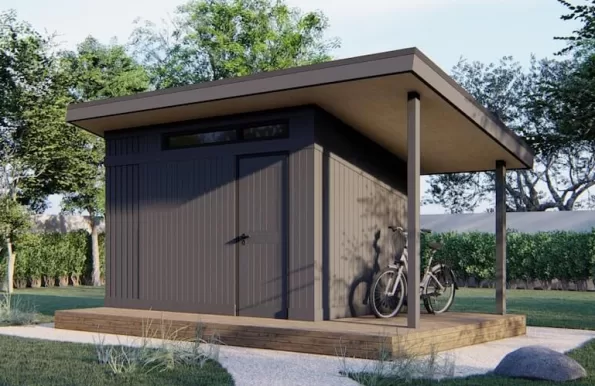
Now, let’s talk about that shed. Whether it’s a home office, an artist’s studio, a gym, or a workshop, a garden building is often unusable in winter because it’s too cold and in summer because it’s too hot. A heat pump is the perfect solution.
Can you add a heat pump to a shed? Absolutely. Here’s how and why:
The Ideal Solution: A Mini-Split Air Source Heat Pump
For a garden building, a small, single-zone mini-split system is ideal. It consists of a compact outdoor unit and a quiet indoor unit mounted on the wall.
Key Considerations for a Shed Installation:
- Insulation is Key: Before even thinking about heating, ensure your shed is well-insulated in the walls, roof, and floor. Without this, any heat generated will escape instantly, making the system inefficient and expensive to run.
- Power Supply: You need a reliable electricity supply. This should be installed by a qualified electrician, running a suitable armoured cable from your main house consumer unit to a small consumer unit in the shed. This is not a job for a standard extension lead.
- Sizing: A small, well-insulated shed will only need a low-capacity unit (e.g., 2.5-5kW). An HVAC professional can advise on the correct size—too powerful, and it will short-cycle; too weak, and it won’t heat effectively.
- Planning Permission: Generally, the external unit of an ASHP for an outbuilding falls under ‘permitted development’, meaning it doesn’t need planning permission, provided it meets certain conditions (e.g., size, placement). It’s always best to check with your local planning authority.
The Benefits for Your Shed:
- Year-Round Use: Transform a seasonal space into a comfortable, functional room every day of the year.
- Efficient Cooling: Work out or focus on a project in cool comfort during a summer heatwave.
- Dehumidification: The heating process also helps reduce dampness and protect your tools, equipment, or furniture from moisture damage.
The Future is Here
The transition to heat pumps is more than just a swap of one appliance for another. It’s a fundamental upgrade to a smarter, more efficient, and sustainable way of heating our homes. With compelling government grants, rising technological efficiency, and the undeniable environmental benefits, the question is not if heat pumps will become the norm, but when.
And as we’ve seen, their potential doesn’t stop at the back door. From warming the family home to making your garden shed the most coveted room in the house, the heat pump is a versatile, future-proof technology ready to power a cleaner, greener, and more comfortable future for Britain.
Disclosure: This post may contain affiliate links. If you make a purchase via these links, shedblog.co.uk may earn a small commission at no extra cost to you.
Useful Links
- Your shed-related Company here: like an old-school Blogroll
- Allotment sheds
- Gym shed
- Watch Horror Movies in your shed
- Looking for a Solo Cruise
- Build your own shipping container home
- Powering the UK Garden Shed
- Become Self Sufficient on ¼ Acre
- ProstaVive – Powerhouse Prostate Offer
- Health & Fitness/Men’s Health
- Buy Barndominium Plans
- TedsWoodworking – Best Woodworking Site On The Internet
- How To Setup A Fully Equipped Small Woodworking Shop
- The Ultimate How-To Guide to Building a Tiny House
Support us via Paypal or Buy me a Coffee