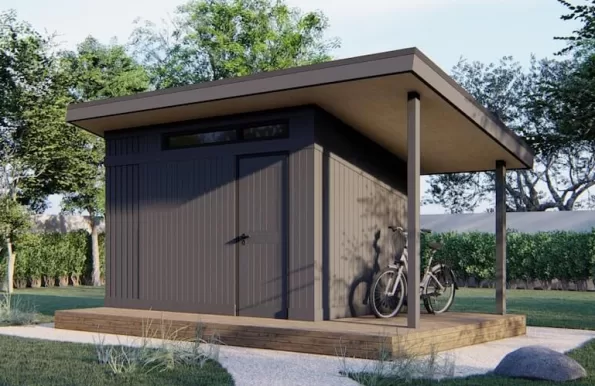
How to Finance a £15,000 Garden Office or Workshop Shed (UK Guide)

The Ultimate UK Guide to Financing a £15,000 Garden Office or Workshop Shed
Dreaming of a dedicated space just steps from your back door? Whether it’s a quiet office away from the distractions of the house, a creative studio, or a fully-equipped workshop for your hobbies, a garden room can be a game-changer. It adds valuable, versatile space without the disruption and expense of a traditional extension.
However, a high-quality, insulated, and functional garden office or workshop isn’t a small investment. While basic sheds can be bought for a few hundred pounds, a structure built for regular, comfortable use – often with foundations, insulation, electrics, and decent finishes – can easily set you back £15,000 or more.
For many, finding this sum readily available in savings isn’t feasible. So, how do you turn that dream into a reality without emptying your bank account or putting life on hold? This guide dives deep into the most common and practical ways to finance a £15,000 garden office or workshop in the UK, helping you figure out the best path for your personal circumstances.
Why £15,000? Understanding the Investment
Let’s quickly touch on why £15,000 is a realistic figure for a quality garden building designed for regular use. This price point typically includes:
- Robust Construction: Timber frame, potentially SIPs (Structurally Insulated Panels), designed to last.
- Good Insulation: Walls, roof, and floor are insulated to make the space usable year-round.
- Quality Windows & Doors: Double-glazed, secure, and energy-efficient.
- Weatherproofing: Durable roofing and cladding materials.
- Installation: Often includes professional assembly on site.
- Base: Preparation of a solid foundation (concrete slab, ground screws, etc.).
- Basic Electrics: Initial wiring, sockets, and lighting (though connecting to the mains might be extra).
Essentially, at £15k, you’re often looking at a building that feels more like a small room of your house than a simple shed. It’s an investment in your home, your lifestyle, and potentially, your property value.
The Financing Puzzle: What Are Your Options?
Funding a significant purchase like this requires careful consideration. There isn’t a single “best” way for everyone; the ideal solution depends on your financial situation, credit history, income, and how quickly you need the funds. Here are the main avenues to explore:
1. Using Your Savings
- What it is: Simply paying for the garden building outright using money you’ve saved up.
- Pros:
- No Debt: You won’t owe money to anyone, avoiding interest payments and monthly repayments.
- No Interest: You save a significant amount compared to borrowing.
- Financial Peace of Mind: Owning the building outright can be less stressful than having a loan hanging over you.
- Simplicity: No applications, credit checks, or loan terms to manage.
- Cons:
- Requires Capital: You need £15,000 readily available, which isn’t achievable for many.
- Depletes Savings: Using a large chunk of savings might leave you vulnerable for emergencies or delay other financial goals (like saving for a deposit or retirement).
- Opportunity Cost: That £15,000 could potentially be earning interest or investment returns elsewhere (though current savings rates are relatively low).
- Suitability: Best for those who have built up substantial savings and can comfortably afford the purchase without compromising their financial security or other essential goals. It’s the most financially prudent option if possible.
2. Personal Loan
- What it is: An unsecured loan from a bank, building society, or online lender, repaid over a fixed term with fixed monthly payments. The loan isn’t secured against your home or the garden building itself.
- Pros:
- Unsecured: Your home or other assets are not directly at risk if you can’t make payments (though defaulting still has serious consequences for your credit score and could lead to legal action).
- Fixed Payments: Knowing exactly how much you owe each month makes budgeting easier.
- Fixed Term: You know precisely when the loan will be paid off.
- Relatively Quick: Applications are often processed within days.
- Competitive Rates: For borrowers with good credit, personal loan rates can be quite competitive, especially for amounts like £15,000.
- Specific Purpose: You can apply for a loan specifically for home improvement or a garden project.
- Cons:
- Interest Costs: You will pay interest over the life of the loan, adding to the total cost.
- Eligibility & Rate Depends on Credit Score: The best rates are reserved for those with excellent credit histories. If your score isn’t perfect, the rate could be much higher, making it more expensive.
- Application Process: Requires providing financial information and undergoing a credit check.
- Not Secured: While a pro in terms of risk to assets, it might mean slightly higher interest rates compared to secured options like remortgaging.
- Suitability: A very common and often sensible option for those with a stable income and good credit history. It offers a clear repayment plan without putting your home directly on the line. Shop around extensively for the best APR (Annual Percentage Rate). Comparison sites are useful here.
3. Remortgaging or Further Advance
- What it is:
- Remortgaging: Taking out a new mortgage on your home, often with a different lender, for a larger amount than your current outstanding mortgage balance. The extra funds are released to you.
- Further Advance: Borrowing more money from your existing mortgage lender, added to your current mortgage balance.
- Pros:
- Potentially Lower Interest Rates: Mortgage rates are often lower than personal loan rates because the debt is secured against your property, which is lower risk for the lender.
- Longer Repayment Terms: You can spread the cost over a much longer period (e.g., 10-25 years or even the remaining term of your mortgage), resulting in lower monthly payments.
- Larger Borrowing Capacity: Mortgages are designed for large sums, making £15,000 easily achievable if you have sufficient equity.
- Cons:
- SECURED AGAINST YOUR HOME: This is the biggest risk. If you fail to keep up with repayments, your home is at risk of repossession.
- Increases Your Overall Mortgage Debt: You will owe more on your house, potentially taking longer to pay off your mortgage entirely.
- Interest Paid Over a Longer Term: While the rate might be lower, paying interest on £15,000 over 20 years will result in paying much more total interest than paying off a personal loan over 5-7 years.
- Fees Involved: Remortgaging can involve arrangement fees, valuation fees, and legal costs. A further advance might have fewer fees but check with your lender.
- Takes Time: The process is slower than getting a personal loan, potentially taking several weeks or months.
- Requires Equity: You need enough equity (the value of your home minus your outstanding mortgage) to borrow the additional £15,000. Lenders will look at your Loan-to-Value (LTV) ratio.
- Potential Impact on Existing Mortgage Deal: Remortgaging means ending your current deal (potentially with early repayment charges), and a further advance might be on a different rate than your main mortgage.
- Suitability: Best for homeowners with significant equity, stable income, and a strong understanding and tolerance of the risks associated with secured debt. It’s a good option if you prioritise low monthly payments over paying the least total interest. This option requires careful consideration and professional mortgage advice.
4. Supplier Finance
- What it is: Some garden office or shed suppliers offer finance options directly or through a partnership with a third-party finance provider. This is often a type of Hire Purchase or a specific personal loan product.
- Tiger Finance
- Posh sheds Finance
- Sheds.co.uk Finance
- Wickes payments
- Walton’s payments
- Buy Sheds Direct payments
- Pros:
- Convenience: The finance application is often part of the purchase process with the supplier.
- Potentially Tailored: The finance product might be specific to buying their garden buildings.
- Quick Decision: Often provides a relatively fast response.
- Cons:
- Limited Choice: You are tied to the finance provider the supplier uses, potentially missing out on better deals elsewhere.
- May Be More Expensive: The interest rates offered by supplier finance might be higher than those you could find independently through a personal loan comparison.
- Sales Pressure: There might be pressure to use their finance option even if it’s not the most competitive.
- Type of Finance: Be clear on whether it’s a secured loan (less likely for this amount but check), hire purchase (you don’t own it until the last payment), or a standard personal loan.
- Suitability: Useful if you value convenience and the supplier offers a competitive rate, but it’s crucial to compare their offering with independent personal loan rates before committing. Don’t assume it’s the best deal just because it’s offered at the point of sale.
5. Credit Cards (Use with Extreme Caution)
- What it is: Using a credit card with a high enough limit to pay for the building, or potentially using a 0% purchase card.
- Pros:
- Quick Access: If you have the available credit, funds are immediately accessible.
- 0% Purchase Cards: If you can get a card with a £15k limit and a 0% introductory rate and are certain you can repay the entire balance before the 0% period ends, you could theoretically borrow interest-free.
- Cons:
- Extremely High Interest Rates: Standard credit card APRs are typically very high. Carrying a £15,000 balance on a standard card would accrue massive interest quickly, potentially costing thousands per year and taking a very long time to pay off, even with substantial monthly payments.
- Unlikely High Limit: Getting a single credit card with a £15,000 limit is difficult and requires an excellent credit history and high income.
- Damaging to Credit Score: Maxing out credit cards significantly harms your credit utilisation ratio, negatively impacting your credit score.
- The 0% Trap: Relying on a 0% card for such a large sum is risky. If you can’t clear the balance before the introductory period expires, the interest rate will skyrocket, leading to the problems mentioned above.
- Suitability: Generally NOT suitable for funding a £15,000 purchase. It might be viable for smaller components or costs (like fitting out the interior) if managed carefully, especially with a 0% card, but should almost certainly be avoided for the main structure cost due to the high potential for crippling debt.
Beyond Just the £15,000: Other Financial Considerations
Remember that £15,000 might only cover the basic structure and installation. Factor in these potential additional costs when budgeting and deciding how much to borrow:
- The Base: While some kits include a basic base, you might need ground screws or a concrete slab, which add costs if not included in the quote.
- Electrics & Plumbing: Running power and potentially water/drainage from your house to the garden room is an extra cost, requiring a qualified electrician and potentially a plumber. Budget £500 – £2000+ depending on distance and complexity.
- Internal Finish: The £15k might be for an unlined shell. You might need plasterboard, skimming, painting, or other internal cladding.
- Heating & Cooling: Will you need heating (electric radiator, underfloor heating, air source heat pump?) or air conditioning for comfort?
- Connectivity: Running an Ethernet cable or installing a Wi-Fi booster.
- Furniture & Equipment: Desks, chairs, storage, tools, lighting fixtures, etc.
- Landscaping: Making the area around the office look good.
- Planning Permission/Building Regulations: While many garden rooms fall under Permitted Development rights, there are rules regarding size, height, location, and use. If your build requires planning permission or needs to meet Building Regulations (e.g., if it’s very close to a boundary, exceptionally large, or intended as sleeping accommodation), there will be application fees and potentially extra build costs to meet regulations. Always check with your local planning authority!
Making the Decision: Which Option is “Best” for YOU?
There’s no universal answer. Ask yourself these questions:
- How much capital do you have saved? Can you cover part or all of the cost without jeopardising your financial security?
- What is your credit score like? A good score opens up better personal loan rates and mortgage deals. Check your score with services like Experian, Equifax, or TransUnion (many offer free checks).
- How quickly do you need the money? Savings are immediate. Personal loans are relatively fast (days). Remortgaging takes longer (weeks/months).
- How comfortable are you with debt? Are you okay with securing debt against your home (remortgage risk)? Or do you prefer unsecured debt (personal loan)?
- What are your priorities? Lowest total cost (savings > personal loan > remortgage) or lowest monthly payment (often remortgage)?
- What is your income stability? Can you comfortably afford the monthly repayments for the duration of the loan term, even if circumstances change slightly?
- Do you have significant equity in your home? If not, remortgaging isn’t a viable option.
A Hybrid Approach:
Sometimes, the best solution is a combination. You might use some savings to reduce the amount you need to borrow, perhaps covering the base and electrics, and then take out a personal loan or further advance for the main structure cost. This reduces the total amount of debt and interest paid.
Final Thoughts: Turning Your Dream into Reality
Financing a £15,000 garden office or workshop is a significant undertaking, but it’s achievable for many homeowners. By carefully considering each option – weighing the pros and cons, understanding the risks, and assessing your own financial health – you can make an informed decision.
Whether you decide to tap into savings, take out a personal loan for its flexibility and fixed terms, leverage the potentially lower rates of a remortgage (with caution!), or explore supplier finance, the key is to shop around, compare interest rates (APR!), understand all fees, and be realistic about your ability to repay.
A well-planned garden office or workshop can provide immense value, adding space, functionality, and potentially even increasing your property’s worth. With the right financing strategy, your dream outdoor space is well within reach.
Take your time, do your research, perhaps speak to a financial advisor or mortgage broker, and build the space that will enhance your life for years to come.
Disclaimer: This blog post provides general information only and does not constitute financial advice. The suitability of any financing option depends entirely on your individual circumstances. You should conduct your own research, compare specific products and rates, and consider consulting with a qualified financial advisor or mortgage broker before making any financial decisions.
Disclosure: This post may contain affiliate links. If you make a purchase via these links, shedblog.co.uk may earn a small commission at no extra cost to you.
Useful Links
- Your shed-related Company here: like an old-school Blogroll
- Allotment sheds
- Gym shed
- Watch Horror Movies in your shed
- Looking for a Solo Cruise
- Build your own shipping container home
- Powering the UK Garden Shed
- Become Self Sufficient on ¼ Acre
- ProstaVive – Powerhouse Prostate Offer
- Health & Fitness/Men’s Health
- Buy Barndominium Plans
- TedsWoodworking – Best Woodworking Site On The Internet
- How To Setup A Fully Equipped Small Woodworking Shop
- The Ultimate How-To Guide to Building a Tiny House
Support us via Paypal or Buy me a Coffee