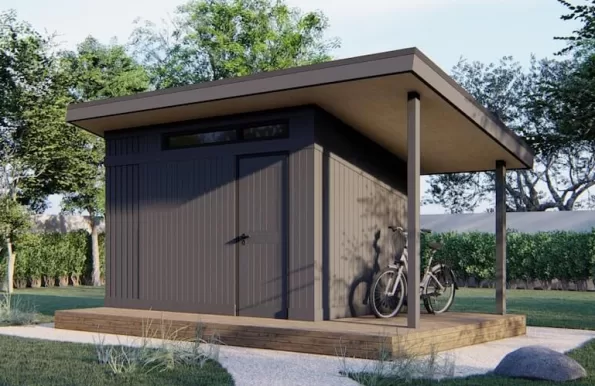
Why You Shouldn’t Mount an EV Charger on a Garden Shed (and the Best Legal Workarounds)

If you have glanced at the UK search trends this week, you will have noticed an absolute explosion of interest in domestic infrastructure. The phrase “england driveway ev charger rules” has skyrocketed by a staggering 1,350% over the past 7 days, while general lookups for “ev charging point” have officially hit an all-time high (thanks google trends UK email)
Before we go any further, a quick word of honesty: this article is research pulled together from publicly available material on the internet, not the voice of a qualified electrician or planning consultant. Treat it as a starting point for your own digging, and get proper professional advice before you spend a penny or lift a drill.
With the UK rapidly moving away from fossil fuels and electric vehicle adoption accelerating, millions of homeowners are staring out of their front windows, sizing up their driveways, and trying to decipher British planning rules.
For the average homeowner, the immediate instinct is to look at the humble garden shed or timber workshop sitting alongside the driveway. It is close to where the car is parked, it feels out of sight, and using it avoids drilling holes through the brickwork of the house.
So can you bolt a 7kW EV charging unit straight onto a timber garden shed?
The short answer is planning law probably won’t stop you, but almost everything else will. The electrical regulations, the charger manufacturers and the installers themselves all push you towards a better solution. And because every true Sheddie loves a clever engineering workaround, there are perfectly legal, safe and efficient ways to get that charging point exactly where you need it. Let us dig into the official rules, the real obstacles, and the best practical fixes.
The Planning Rules: Easier Than You Think
Under current English planning law, installing a domestic EV charge point usually falls under Permitted Development, set out in Schedule 2, Part 2, Classes D and E of the General Permitted Development Order. That means no planning application is needed, provided your installation meets the criteria.
For a wall-mounted charging outlet (Class D):
- The outlet and its casing must not exceed 0.2 cubic metres
- It must not be within a site designated as a scheduled monument
- It must not be within the curtilage of a listed building
For a freestanding upstand or pedestal (Class E):
- It must not exceed 1.6 metres in height within the garden of a house or block of flats (2.7 metres elsewhere, such as commercial car parks)
- Only one upstand is allowed per parking space
- The same scheduled monument and listed building restrictions apply
A couple of points worth knowing. The old rule banning chargers within 2 metres of a public highway was scrapped in the 2023 update to the legislation, so a charger near the front of your drive is no longer the planning headache it once was. And there is a tidy-up condition too: when the charger is no longer needed, the wall or land it occupied must be returned to its previous state. If you live in a conservation area, check with your local planning authority first, as an Article 4 direction can remove permitted development rights.
Notice what’s missing from all of that: nothing in the planning rules says a word about sheds. So why does every installer wince when you suggest it?
The Real Snag: Electrics, Not Planning
The genuine obstacles to shed-mounting are electrical and structural, and they are far harder to argue with than a planning officer.
Installer and manufacturer requirements
A standard home charger pulls a continuous load of around 7kW (roughly 32 amps) for hours at a stretch. Charger manufacturers specify mounting on a solid, stable surface, and most installation firms simply refuse to fix a unit to timber cladding. Shiplap and tongue-and-groove boards flex, warp with moisture, and work fixings loose over time. A heavy unit vibrating on softening screws, carrying 32 amps, bolted to dry timber, is exactly the scenario the BS 7671 (IET Wiring Regulations) safety culture exists to prevent. Mount it anyway and you will likely void the manufacturer’s warranty and struggle to find an installer willing to sign it off.
Building regulations still apply
Even though planning permission isn’t normally needed, the installation must comply with Building Regulations. Part P covers domestic electrical work, and Part S covers EV charging infrastructure. Your installer must also notify the Distribution Network Operator (DNO) so the local grid can handle the extra load. None of this paperwork gets easier when the charger is screwed to a structure the assessor regards as a glorified garden building.
Why Bother Putting It Near the Shed at All? Think Solar
At this point you might wonder why anyone would fight to get the charger down the garden in the first place. The answer, for a growing number of Sheddies, is the roof above their workbench.
A shed, workshop or garden office roof is prime, unshaded real estate for solar panels, and PV on an outbuilding generally falls under permitted development just as it does on the house (the usual listed building and conservation area caveats apply). Even a modest 8ft x 10ft pent roof can carry two or three panels, and a larger workshop or garage roof can host a genuinely useful array.
Here is where the geography starts to pay off. If your panels are on the shed and your car is parked beside it, putting the charging infrastructure in the same corner of the plot keeps the whole system tight:
- Shorter cable runs, lower losses. DC cabling from the panels to an inverter inside the shed, then a short AC run to a pedestal beside it, beats hauling everything back to the house and out again.
- Solar-compatible chargers. Units such as the myenergi Zappi can monitor your generation and divert surplus solar straight into the car instead of exporting it to the grid for pennies. Free miles from the shed roof is about as Sheddie as energy independence gets.
- A home for battery storage. The shed is the natural spot for a battery to soak up daytime generation for evening charging. One note of caution: lithium batteries have their own siting, ventilation and fire-safety considerations, so take your installer’s advice on whether inside a timber building is appropriate, or whether an external enclosure is the wiser home.
- One trench, one job. If you are digging a trench for the charger’s SWA cable anyway, it costs little extra to spec the supply and ducting for solar, battery and charger together, even if the panels come later. Retrofitting a second cable run in two years is the expensive way round.
So the shed may not be allowed to hold the charger on its cladding, but it can absolutely become the energy hub of the whole plot: panels on top, an inverter and consumer unit inside, pedestal alongside.
3 Clever Workarounds for Sheddies
You shouldn’t screw the pod into the timber cladding of your workshop, but that does not mean your driveway project is dead in the water. You can absolutely use your shed’s strategic location, and any existing electrical supply, to your advantage. Here are three sound, regulation-compliant workarounds.
1. The Post or Pedestal Mount (Shed-Adjacent)
This is by far the cleanest and most popular solution. Instead of mounting the charger on the shed, you install a dedicated metal or composite charging pedestal directly next to it. Keep it under 1.6 metres tall and it sits comfortably within permitted development.
[ Shed Wall ] <--- (safe distance) ---> [ Steel Pedestal / EV Charger ]
                                                    |
                                            [ Concrete Base ]
The Steel Wire Armoured (SWA) cable runs from your home’s consumer unit, passes discreetly through or underneath the shed, and emerges beside it. The pedestal bolts into a small concrete pad. The result is an independent, solid, fully compliant installation that any installer will happily sign off.
2. The Boundary Wall Integration
If your shed is nestled against a brick, stone or flint boundary wall, or you have a substantial masonry retaining wall by the drive, you are in luck. You can mount the charger directly onto the permanent, non-combustible brickwork. The shed then becomes the perfect weather-protected home for the secondary consumer unit, isolation switch or tethered cable storage. The hardware stays tidy, the timber stays safe, and the charger sits on solid masonry.
3. The Purpose-Built Pillar
Planning a new driveway layout or a workshop upgrade anyway? Build a permanent brick, stone or engineered concrete pillar at the corner of the drive, immediately adjacent to the timber structure. It gives the charger the rock-solid mounting surface it needs, adds a bit of kerb appeal, and lets your electrician route the supply neatly from the shed’s distribution board through a hidden conduit.
Crucial Electrical Considerations for Outdoor Builds
Before you book an installer, audit the power supply heading down your garden. You cannot run a 7kW charger from the double socket you use for the lawnmower.
A car charger needs its own dedicated circuit. Your electrician will calculate your household’s total load to confirm the main fuse (typically 60A, 80A or 100A) can handle car charging alongside the oven, shower and workshop tools.
If your shed already has a decent sub-main running from the house, it may be possible to take the charger supply from a small consumer unit inside the shed, saving you from digging up the garden a second time. Use an installer registered under a Part P competent person scheme, and if you are claiming any government charge point grant, make sure they are OZEV-authorised.
Summary: Future-Proofing Your Driveway
The surge in search trends proves the UK is racing towards an electric future, and the planning rules are now more relaxed than most people realise. Your timber shed shouldn’t carry the charger on its own shoulders, but with a solid post, a masonry wall or a purpose-built pillar beside it, it can still be the beating heart of your outdoor power setup.
Plan ahead, build a permanent anchor point, and keep your electric vehicle charged, safe and road-ready.
Sourcing the Kit Yourself: What, Where and How
Fancy doing the legwork (and the trench digging) yourself before the electrician arrives? Here is what is actually on the shopping list. The big names in UK home chargers are the myenergi Zappi (the solar diverter favourite, made in Lincolnshire), the Ohme Home Pro and Ohme ePod (loved for smart tariff integration with Octopus Intelligent), the Hypervolt Home 3 Pro, the Wallbox Pulsar Max, Pod Point Solo 3 and EO Mini Pro, with most units landing somewhere between £450 and £950 before installation. For the shed-adjacent pedestal, most manufacturers sell a matching mounting post (myenergi and Wallbox both do), or you can buy a universal galvanised steel EV charger mounting post from electrical wholesalers for £100 to £250. The consumables are the unglamorous bit: three-core SWA armoured cable (typically 6mm² or 10mm² depending on the run length and load, which your electrician will confirm), ducting, a small garage consumer unit and a Type A RCBO or the charger’s built-in protection. You can buy nearly all of it from Screwfix, Toolstation, City Electrical Factors (CEF), TLC Electrical or direct from the manufacturers, and the chargers themselves are increasingly on Amazon UK too. The one thing you cannot DIY is the final connection: the installation must be carried out and certified by a qualified electrician under a Part P scheme, who will also handle the DNO notification, and buying your own charger may affect eligibility for any grant or bundled installation deal, so price both routes before clicking buy.
The planning rules above apply to England only, and as regulations differ in Wales, Scotland and Northern Ireland (and individual circumstances vary), always check with your local planning authority and a qualified installer before starting work.
Meta Data
- Meta Description: Searches for England driveway EV charger rules are up 1,350%. We explain the real permitted development rules, why timber sheds are a poor charger mount, the best legal workarounds, and how to link it all to shed roof solar.
- Keywords: England driveway EV charger rules, EV charging point permitted development, garden shed EV charger, shed solar panels EV charging, EV charger upstand 1.6m, driveway charging post, Part S building regulations
Disclosure: This post may contain affiliate links. If you make a purchase via these links, shedblog.co.uk may earn a small commission at no extra cost to you.
Useful Links
- Your shed-related Company here: like an old-school Blogroll
- Allotment sheds
- Gym shed
- Watch Horror Movies in your shed
- Looking for a Solo Cruise
- Build your own shipping container home
- Powering the UK Garden Shed
- Become Self Sufficient on ¼ Acre
- ProstaVive – Powerhouse Prostate Offer
- Health & Fitness/Men’s Health
- Buy Barndominium Plans
- TedsWoodworking – Best Woodworking Site On The Internet
- How To Setup A Fully Equipped Small Woodworking Shop
- The Ultimate How-To Guide to Building a Tiny House
Support us via Paypal or Buy me a Coffee