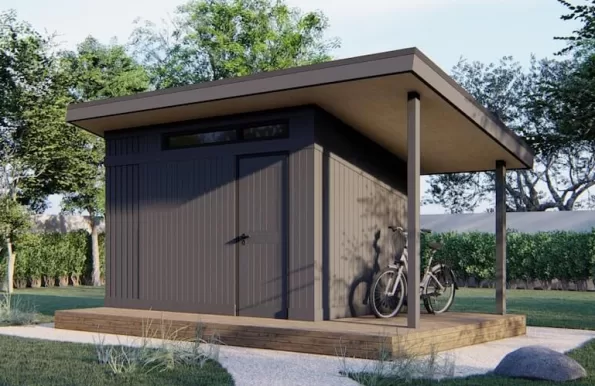
SHED LOADS OF DOUGH: The Garden Bakery Craze Sweeping Britain’s Driveways

The Cake Shed: How to Store and Sell Your Bakes From the Garden
So you’ve been baking up a storm, the kitchen worktops are groaning under the weight of Victoria sponges and lemon drizzles, and the neighbours keep dropping hints. Maybe it’s time to turn that hobby into a little earner. A dedicated cake shed in the garden could be exactly what you need, and the concept is genuinely taking off across the UK. From brownies in converted garden huts to honesty-box cupcakes at the end of driveways, the cake shed is having a moment; The last few years we even had them entering shed of the year.
“Baker wins battle with council to keep ‘honesty box’ cake shed in garden” – Covering local planning permission disputes where communities rally behind their local garden bakers.
“How a lockdown hobby turned into a thriving village cake shed business” – chronicling the rise of micro-bakeries built in residential gardens to serve rural villages.
“Villagers devastated after thief steals cash box from roadside cake shed” – A look at the security challenges and community support surrounding rural honesty-box ventures.
“Meet the baker serving up fresh cupcakes daily from her custom-built garden studio” – Spotlighting successful entrepreneurs who traded high-street commercial rent for a timber garden outbuilding.
But before you nail up a shelf or box up a brownie, there is a surprising amount of law to get your head around. The good news is that none of it is especially complicated, and once you understand it all, it is far more manageable than it first appears. Here is a thorough guide to setting up a cake shed the right way.
First, Let’s Kill a Myth
A lot of home bakers assume that selling a few cakes to neighbours or popping up at a local fair sits somewhere in a legal grey area. It really does not. UK food law is pretty unambiguous: the moment you sell food, even occasionally, even for charity, you are running a food business. That means real rules, real paperwork, and real consequences if you ignore them.
This surprises people. “I only sell a few cakes at the weekend” is not a defence that holds up with your local council’s environmental health team. Get everything in order from day one and you will never have a problem.
Getting Yourself Registered
Before you sell a single slice, you need to register your home as a food business with your local authority. Here is the thing though: it is completely free. You do it online through your council’s website and it takes about twenty minutes. The catch is that you must submit it at least 28 days before you start trading, and you cannot pay to speed that up. So factor that waiting period into your plans.
Registration applies whether you are selling from a market stall, through a Facebook post, from your garden shed, or supplying cakes to a local cafe. The threshold is not about money; it is simply about whether food is being sold or provided on a regular basis.
Once you are registered, your local authority’s environmental health officers can visit to inspect your premises. They will look at your kitchen, your storage, your processes, and yes, your cake shed. This inspection results in a Food Hygiene Rating, the same scheme you see displayed on stickers in restaurant windows. A good rating builds real trust with customers. A poor one is published online, publicly searchable, and genuinely damaging for a small local business.
One more registration note: if you make any significant changes after registering, like adding a shed, changing what you produce, or stopping trading altogether, you are legally required to tell your council within 28 days of that change.
Planning Permission: Worth a Quick Check
For most people, a small garden shed does not need planning permission. It falls under permitted development, which allows homeowners to add certain structures without a formal application. There are size limits, height restrictions, and location rules though, so it is worth confirming your shed sits within these.
Where it gets a bit more nuanced is when you start using that garden building for regular commercial activity. Running a business from home is generally fine, provided the activity remains secondary to the main residential use of the property. In practice this means the business should not dominate the character of the place, should not involve significant customer footfall in and out, and should not create noise or disturbance for neighbours.
If customers are regularly visiting your property, there is an argument that a change of use has occurred, which could technically require planning permission. The sensible approach is a quick pre-application enquiry to your local planning department before you start. This is usually free, gives you a written record of the council’s view, and means you are protected if a neighbour raises a complaint later.
If you live in a conservation area, a listed building, or a property with restrictive covenants in the deeds, be more careful. Restrictive covenants in particular are easy to overlook. These are clauses, sometimes decades old, written into your property deeds that can prevent you from running commercial activity from your home at all. A solicitor can check these for you and it is absolutely worth doing before you spend money fitting out a shed.
Business Rates: The Bit Nobody Expects
Here is one that catches people off guard. If you use part of your home exclusively for business, your property may attract business rates on top of your council tax. This is assessed by the Valuation Office Agency on a case-by-case basis.
A cake shed used occasionally for storage and as a customer pick-up point is unlikely to trigger business rates in practice. But if the shed is permanently kitted out as a dedicated business space with regular customer visits, the VOA could take a different view. Contact your local business rates team and ask the question before you get started. Get their response in writing.
Keeping Food Safe: The Paperwork Side
Every registered food business needs a documented food safety management system. That sounds very corporate but it really is not. The Food Standards Agency provides a free tool called Safer Food Better Business, built specifically for small operations, and it takes most of the hard work out of it.
Your system just needs to show that you have thought about how you prevent contamination, how you store ingredients and finished products, how you manage temperatures, and what you would do if something went wrong. Environmental health officers will ask to see this during an inspection, and having it in good order makes a genuine difference to your rating.
The basics to cover are that ingredients are stored correctly and in date, products are kept at safe temperatures particularly anything with cream or fresh fruit fillings, your shed and prep area are cleaned on a regular schedule, anyone handling food has had appropriate training, and you understand cross-contamination risks around common allergens like nuts, gluten, and dairy.
Natasha’s Law: Please Read This Section
This is the most important legal area for anyone selling homemade baked goods, and the one most likely to trip people up.
Natasha’s Law came into force in October 2021 following the death of 15-year-old Natasha Ednan-Laperouse, who died after eating a Pret a Manger baguette that contained undeclared sesame. The law closed a serious loophole that had existed in UK food legislation for years.
It applies to what is called ‘prepacked for Direct Sale food, or PPDS. This is any food that is wrapped or packaged on the premises before the customer selects it, and sold by the same business. If you are boxing up brownies, wrapping cake slices in cellophane, or bagging cookies before a customer arrives to collect, that product is PPDS. It must carry a full ingredients list with all 14 major allergens clearly emphasised in bold.
The 14 allergens that must be declared are celery, cereals containing gluten, crustaceans, eggs, fish, lupin, milk, molluscs, mustard, nuts, peanuts, sesame seeds, soya, and sulphur dioxide.
This is not optional guidance. It is law. A Trading Standards survey found that more than half of businesses checked were not providing full ingredient lists for their PPDS products. Non-compliance can result in improvement notices, fines, and in serious cases prosecution.
If you sell cakes unwrapped and only package them after a customer picks them, the labelling requirements are slightly different. You still need to be able to provide allergen information on request, either verbally or in writing, but you do not need a full printed label on every item. That said, having a written allergen guide for every product is strongly recommended regardless. Customers with allergies will not buy from you without it, and nor should they.
If you are ever unsure whether your product counts as PPDS, the Food Standards Agency has a step-by-step allergen labelling decision tree on their website that takes you through it clearly.

Sorting Your Insurance
Your home insurance almost certainly does not cover you for business activity. If a customer has an allergic reaction to something you sold them, or trips over a loose paving slab on the way to your shed, you need public liability insurance. It is not expensive for a small home bakery and policies are widely available from specialist food business insurers. Adding product liability cover is sensible too, which specifically covers claims arising from what you sell.
If you have a mortgage, also worth checking your mortgage conditions. Some lenders include clauses about running a business from the property, particularly where customers visit regularly.
The Food Hygiene Certificate
Not technically a legal requirement but effectively essential. A Level 2 Food Hygiene and Safety certificate covers safe food handling, storage temperatures, cross-contamination, cleaning, and pest control. Courses are online, take two to three hours, and cost between ten and twenty pounds. Some providers offer them free. You can sit in an evening and have your certificate the same day. Most councils expect to see it, and customers increasingly ask about it.
Setting Up the Shed Itself
Not every shed is suitable straight out of the box, so think about the following before filling it with tiered trays.
Baked goods need airflow to stay fresh. A stuffy shed will make cakes sweat and go stale far faster than they should. Add vents or a small electric fan. In summer, a shed can also get extremely hot and direct sunlight through windows will ruin anything with buttercream in under an hour. Insulation, reflective window film, or a portable air conditioning unit will all help if you want to trade through warmer months.
Glass-fronted display cabinets keep things hygienic and protect from insects, which matters both for food safety and for looking professional. A small fridge for cream-filled products is worth having from the start.
For power, a simple outdoor socket run by a qualified electrician is the cleanest solution. A handwashing station, hot water, soap, and paper towels will impress any environmental health officer who comes knocking.
Finally, do a simple written risk assessment for customer visits. Remove any trip hazards, add clear signage, and make sure the path to the shed is safe. You have a duty of care to anyone entering your property.

10 Things That Will Actually Sell From a Cake Shed
One of the best things about a cake shed is that you can keep the menu tight and rotate it with the seasons. Here are ten proven sellers that tend to fly off the shelf.
1. Brownies. The undisputed king of the cake shed. Dense, fudgy, easy to portion, and they travel well. Offer a classic chocolate version alongside a seasonal twist, salted caramel, Biscoff, or orange. Customers will buy multiples every time.
2. Traybakes. The practical favourite. Easy to produce in volume, simple to slice into portions, and endlessly adaptable. Millionaire’s shortbread, lemon drizzle traybake, and coffee and walnut squares all perform brilliantly.
3. Cupcakes. Visual impact sells cakes and cupcakes deliver that better than almost anything. Seasonal decorations for Easter, Christmas, and Halloween create natural spikes in demand. Keep a house flavour like vanilla or red velvet on the menu all year.
4. Cookies. Shelf-stable, portion-friendly, and appealing to children, which matters if your shed is near a school route or a park. Chocolate chip is the reliable backbone but brown butter, Oreo-stuffed, and white chocolate and raspberry versions create real excitement.
5. Loaf cakes. Lemon drizzle, banana bread, and courgette and walnut loaves are dependable sellers that feel like proper value for money. Slice individually for impulse buyers, or sell whole for people wanting a proper treat to take home.
6. Seasonal specials. Hot cross buns at Easter, mince pies at Christmas, and simnel cake in spring. Seasonal items create urgency that a permanent menu never does. People know they are only available for a few weeks and that drives purchases.
7. Celebration cake slices. A chilled cabinet with generous slices of layer cakes at two to three pounds each is a strong earner. Victoria sponge, carrot cake, and chocolate fudge cake are the consistent performers. Change one or two flavours monthly to keep regular customers coming back.
8. Flapjacks and energy bars. Ideal for the health-adjacent customer who still wants a treat. Oat-based bakes with dried fruit, seeds, and honey sell well and have a decent shelf life compared to cream-filled products.
9. Gluten-free and vegan options. Having clearly labelled gluten-free and vegan products immediately doubles your potential customer base. It does not need to be the entire menu. Two or three options, done well and labelled clearly, signals that you have thought about everyone.
10. Savoury bakes. A slightly unexpected addition but one that works particularly well at weekends. Cheese scones, sausage rolls, and savoury muffins attract customers who would never buy a brownie. Pair with the sweet range and average basket size goes up noticeably.
A Final Word
A cake shed is a genuinely lovely small business idea. Low overheads, flexible hours, and you get to spend your days doing something you love. But the legal framework is real and it matters. Register with the council, get your food hygiene certificate, understand Natasha’s Law properly, sort your insurance, and confirm the position on planning and mortgage conditions before you spend a penny fitting the shed out.
The admin takes a weekend. The rewards, done properly, can last considerably longer.
Disclosure: This post may contain affiliate links. If you make a purchase via these links, shedblog.co.uk may earn a small commission at no extra cost to you.
Useful Links
- Your shed-related Company here: like an old-school Blogroll
- Allotment sheds
- Gym shed
- Watch Horror Movies in your shed
- Looking for a Solo Cruise
- Build your own shipping container home
- Powering the UK Garden Shed
- Become Self Sufficient on ¼ Acre
- ProstaVive – Powerhouse Prostate Offer
- Health & Fitness/Men’s Health
- Buy Barndominium Plans
- TedsWoodworking – Best Woodworking Site On The Internet
- How To Setup A Fully Equipped Small Woodworking Shop
- The Ultimate How-To Guide to Building a Tiny House
Support us via Paypal or Buy me a Coffee