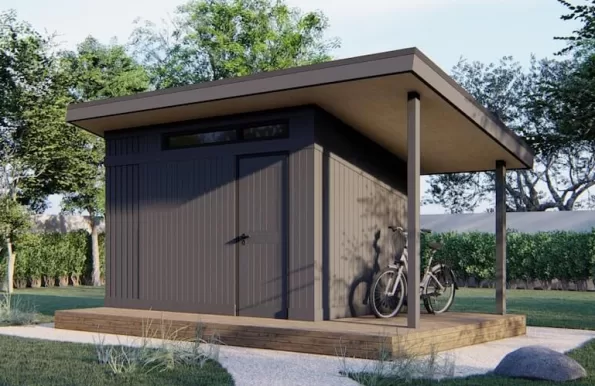
Padel in the Shed: Can You Build a Court at the Bottom of Your Garden?

If you’ve kept even half an eye on the sporting world lately, you’ll know there is a massive new craze sweeping the UK. A mammoth 35,000 square-foot padel club is set to open in Cardiff Bay (across the way from Shed HQ) later this summer, boasting eight top-of-the-range indoor courts and professional coaching. It’s being launched by Padium, the same premium operators who have already taken London’s Canary Wharf by storm.
With huge, luxury venues springing up across the country, it got us thinking here at ShedBlog HQ: Do you really need to wait for a 35,000-square-foot warehouse to open in your postcode? Or, with a bit of DIY ingenuity, could you bring the UK’s fastest-growing sport right to the bottom of your garden?
Can you fit a padel court in your garden shed? Let’s grab our bats and find out.
What on Earth is Padel?
Before we start measuring the lawn, we should probably explain what padel actually is. If you haven’t played it yet, you are almost certainly going to within the next few years.
Described as a glorious mix between tennis and squash, padel is typically played in doubles on an enclosed court. The scoring is exactly the same as tennis, but that’s where the similarities start to diverge. Instead of a strung racquet, you play with a solid, perforated bat. The serve is strictly underarm (making it incredibly easy for beginners to pick up), and the balls are slightly depressurised, which slows the game down and allows for longer, more exciting rallies.
The best part? Just like squash, you can play the ball off the walls. The court is surrounded by glass and metallic mesh, meaning that if a ball bounces past you, the point isn’t over, you can just wait for it to rebound off the back glass and hit it back over the net. It’s highly tactical, brilliantly social, and famously addictive.
The Big Question: Can You Fit a Full Court in a Shed?
Let’s look at the cold, hard mathematics.
A standard padel court is 20 metres long and 10 metres wide. That’s a footprint of 200 square metres (about 2,150 square feet), and that’s without accounting for the walkways, seating areas, or the cheeky post-match beverage fridge.
Then, there’s the height. Because lobbing the ball is a massive tactical part of padel, you need serious vertical clearance. A minimum ceiling height of 6 metres (nearly 20 feet) is required, though 8 metres is actively encouraged by professionals.
So, can you fit a full-sized padel court in a standard garden shed? Unless your “shed” happens to be a steel-framed agricultural barn or a decommissioned aircraft hangar, the answer is a resounding no. Even the most ambitious 20x10ft log cabin is going to fall hilariously short.
But don’t put your toolbelt away just yet. While a full court is out of the question for the average suburban garden, a dedicated Padel Practice Shed is entirely within your grasp.
Creating the Ultimate Shed Practice Space
Padel is a game of reflexes, repetition, and fine margins. You don’t need a full court to perfect your volley or master your off-the-wall returns. A well-designed garden room or large shed can be transformed into the perfect solo training academy. Here is how you do it.
1. The Rebound Wall
To practice your groundstrokes and returns, you need a solid wall. A standard wooden shed wall won’t survive the repetitive impact of a padel ball for long, it will rattle the cladding loose and drive your neighbours mad.
Instead, build an internal false wall using thick structural plywood (at least 18mm) or medium-density fibreboard (MDF). Mount it securely to your shed’s timber framing with a gap behind it, and fill that cavity with dense acoustic insulation. This gives you a true, squash-like rebound surface to hit against, allowing you to practice returning balls at varying speeds.
2. The Volley Net
If you don’t want to deafen yourself in a small space, swap the solid wall for a heavy-duty sports netting system. You can hang a loosely tensioned net from the roof joists of your shed. Stand a few feet back and practice your volleys and “bandejas” (a popular padel smash shot). The net will safely catch the ball and drop it to the floor.
3. Perfecting the Floor
Footwork is everything in padel. You’ll be pivoting, lunging, and springing backwards. Traditional shed floors (OSB or pine floorboards) will be too slippery and could lead to a twisted ankle.
The ideal solution is to buy a roll of short-pile artificial grass, specifically the type used for sports, not the fluffy decorative stuff used for patios. Padel courts use a light dusting of fine silica sand brushed into the artificial turf to provide the perfect amount of grip and slide. Recreating this in your shed will make your practice sessions feel incredibly authentic.
4. Let There Be Light
Indoor padel requires exceptional lighting because the ball moves fast. Forget the single dangling 60-watt bulb. You’ll want to install flush LED batten lights across the ceiling. They offer bright, shadow-free illumination without dangling down and risking damage from a stray swing of your bat.
A Word of Warning: The Sound
If there is one thing padel is famous for (other than being wildly fun), it’s the noise. A padel bat striking a ball makes a very distinct, hollow thwack. If you are hitting against a wooden shed wall a hundred times an evening, your neighbours will quickly form a pitchfork-wielding mob.
Soundproofing is non-negotiable for a practice shed. You’ll want to insulate the walls and ceiling with acoustic rock wool, put down heavy rubber gym matting underneath your artificial grass to absorb impact vibrations, and make sure your doors and windows are draft-sealed to keep the noise contained.
The Verdict
While you might not be able to rival Padium’s spectacular new 35,000 square-foot Cardiff Bay venue in your back garden, you absolutely can bring the spirit of the sport home. A large shed or garden room makes an exceptional practice studio for perfecting your technique, grooving your footwork, and escaping for an hour of high-energy stress relief.
So, if you’ve caught the padel bug, it might just be time to clear out the lawnmower, insulate the walls, and turn your humble shed into your very own racket-sports sanctuary!
Disclosure: This post may contain affiliate links. If you make a purchase via these links, shedblog.co.uk may earn a small commission at no extra cost to you.
Useful Links
- Your shed-related Company here: like an old-school Blogroll
- Allotment sheds
- Gym shed
- Watch Horror Movies in your shed
- Looking for a Solo Cruise
- Build your own shipping container home
- Powering the UK Garden Shed
- Become Self Sufficient on ¼ Acre
- ProstaVive – Powerhouse Prostate Offer
- Health & Fitness/Men’s Health
- Buy Barndominium Plans
- TedsWoodworking – Best Woodworking Site On The Internet
- How To Setup A Fully Equipped Small Woodworking Shop
- The Ultimate How-To Guide to Building a Tiny House
Support us via Paypal or Buy me a Coffee