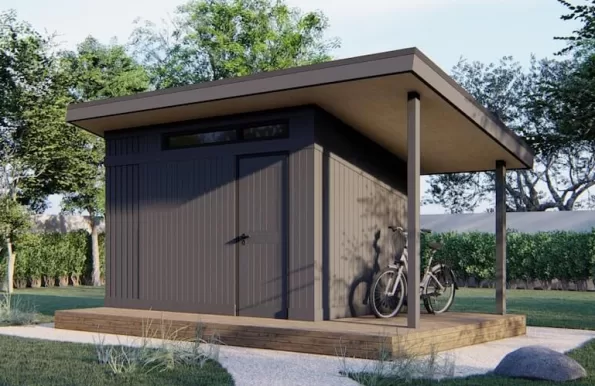
The Shed Solution: Reclaiming Your Well-being in an Era of Burnout

If you’ve spent any time online recently, you’ve likely noticed the same alarming trends that Google has been tracking. From “burnout at work” to the frantic, skyrocketing search interest in “high cortisol,” we are living in a moment of collective exhaustion. It feels as though the modern world—with its relentless digital connectivity, the pressures of parenthood, and the never-ending grind—is pushing our nervous systems to the brink.
In the UK, where the commute is often soul-crushing and the blurred lines between “home life” and “work life” have become the new normal, this isn’t just a trend; it’s a crisis.
But what if the antidote to this modern epidemic wasn’t a retreat, a supplement, or a costly therapy session? What if, quite literally, the solution was waiting for you at the bottom of your garden? At Shedblog.co.uk, we’ve long championed the shed as more than just a place to store lawnmowers. It is the last great frontier of personal autonomy. Here is how embracing the “Shed Life” balance can help you lower your cortisol and claw back your sanity.
The Commute Kill-Switch: Working from the Shed
The data is clear: people are desperate for “low-stress jobs”, and a huge portion of that stress stems from the daily grind. The commute alone—the traffic, the train delays, the sensory overload of public transport—sets our cortisol levels soaring before we’ve even opened our laptops.
By transforming your garden shed into a dedicated workspace, you are performing a radical act of self-preservation. When you work from a shed, you reclaim the hours lost to commuting. Those 60 to 90 minutes of “transit stress” are replaced by a short, peaceful walk through your own garden.
More importantly, a shed provides a physical boundary. One of the biggest drivers of “work burnout” is the inability to switch off. When your office is on the kitchen table, you are never truly “home.” When your office is a garden building, the act of locking the door and walking back to the house acts as a psychological ritual. It signals to your brain that the workday is over. It creates a space that contains your professional responsibilities, transforming your home back into a sanctuary instead of a branch office.
The Shed as Your Personal Decompression Chamber
The recent spike in searches for “burnout retreats” and “cortisol meters” suggests that we are all looking for a way to reset our nervous systems. But why pay thousands of pounds for a retreat when you can create a permanent, personal decompression zone just steps away?
If your stress is physical, turn your shed into a gym or yoga studio. The beauty of a “shed gym” is the absolute lack of comparison. There’s no one watching, no loud music you didn’t choose, and no membership fees. Whether it’s 20 minutes of restorative yoga to lower your cortisol or a high-intensity session to sweat out the day’s frustrations, a shed gym allows you to move your body in a way that feels healing rather than performative.
Or perhaps your burnout is social? The rise in “parental burnout” is heartbreakingly real. The “default parent” often feels like they are on 24/7 standby. A shed can serve as a “partying” space—not in the sense of loud, late-night raves, but as a space for human connection. Whether it’s a craft room, a book nook, or a place to have a glass of wine with a friend while the kids are inside, the shed is a space where the rules of the house don’t apply. It is a space for “you” again, not just “you the employee” or “you the parent.”
Tackling the Cortisol Crisis: The Biological Benefit
Science tells us that environment is a massive factor in cortisol regulation. We are bombarded by artificial light, noise pollution, and constant notifications.
A shed, by its nature, is usually a quieter, more tactile, and more natural environment. It is often closer to the earth. When you step into a well-insulated, wooden shed, the sensory input changes. The smell of wood, the sound of rain on a roof, the visual of your garden—these are grounding elements.
When you use your shed for a hobby, you are engaging in “flow states.” Whether you are woodworking, painting, playing music, or simply sitting and reading, these activities are direct antagonists to the cortisol-heavy stress of modern life. By dedicating an area of your property to leisure rather than output, you are telling your body that it is safe to downshift.
A Practical Call to Action
If you are feeling the weight of the “all-time high” burnout levels, don’t just add “cortisol water” or “cortisol tests” to your to-do list. Those are symptoms of the problem, not the cure. The cure is reclaiming your space.
Start small:
- Clear the Clutter: If your shed is currently a graveyard for broken garden tools, have a clear-out. That chaos is just more mental baggage.
- Define the Purpose: Is this a quiet office? A yoga studio? A creative sanctuary? Define it so it has a purpose that serves your well-being.
- Make it Yours: Add comfort. A good chair, some decent lighting, perhaps a small heater to make it a year-round haven.
The UK’s obsession with the garden shed isn’t just about storage—it’s a cultural recognition that we need a retreat. In 2026, as the world feels faster and more demanding than ever, your shed might just be the most important room in your life. It is the physical manifestation of the boundary between the chaos of the world and the peace of your own mind.
Don’t let the stress win. Go to the bottom of the garden, close the door, and breathe. Your shed is ready. Are you?
Disclosure: This post may contain affiliate links. If you make a purchase via these links, shedblog.co.uk may earn a small commission at no extra cost to you.
Useful Links
- Your shed-related Company here: like an old-school Blogroll
- Allotment sheds
- Gym shed
- Watch Horror Movies in your shed
- Looking for a Solo Cruise
- Build your own shipping container home
- Powering the UK Garden Shed
- Become Self Sufficient on ¼ Acre
- ProstaVive – Powerhouse Prostate Offer
- Health & Fitness/Men’s Health
- Buy Barndominium Plans
- TedsWoodworking – Best Woodworking Site On The Internet
- How To Setup A Fully Equipped Small Woodworking Shop
- The Ultimate How-To Guide to Building a Tiny House
Support us via Paypal or Buy me a Coffee